THE FINAL WORD / EDITORIAL REVIEW
Pentiment
An absorbing historical role-playing story about responsibility, limited knowledge and the changing memory of a community.
Game facts
- Developer
- Obsidian Entertainment
- Publisher
- Xbox Game Studios
- Released
- 14 November 2022
- Platforms
- Windows (Steam edition)
- Model
- Paid game
- PEGI
- 16 · Bad Language — Steam UK listing
- Players
- Single-player
- Length
- Medium
- Difficulty
- 2 / 5 · Approachable
- Steam Deck
- Verified
PEGI source ↗ · Steam Deck status source ↗
Edition: Base game
The score, explained
The interest and responsiveness of the core decisions and actions.
How progression, exploration and goals fit together.
The coherence of the visual, musical and narrative presentation.
How clearly the game explains its rules and offers useful ways to engage.
The depth of optional goals, alternative approaches and reasons to return.
An artist enters a community with a memory
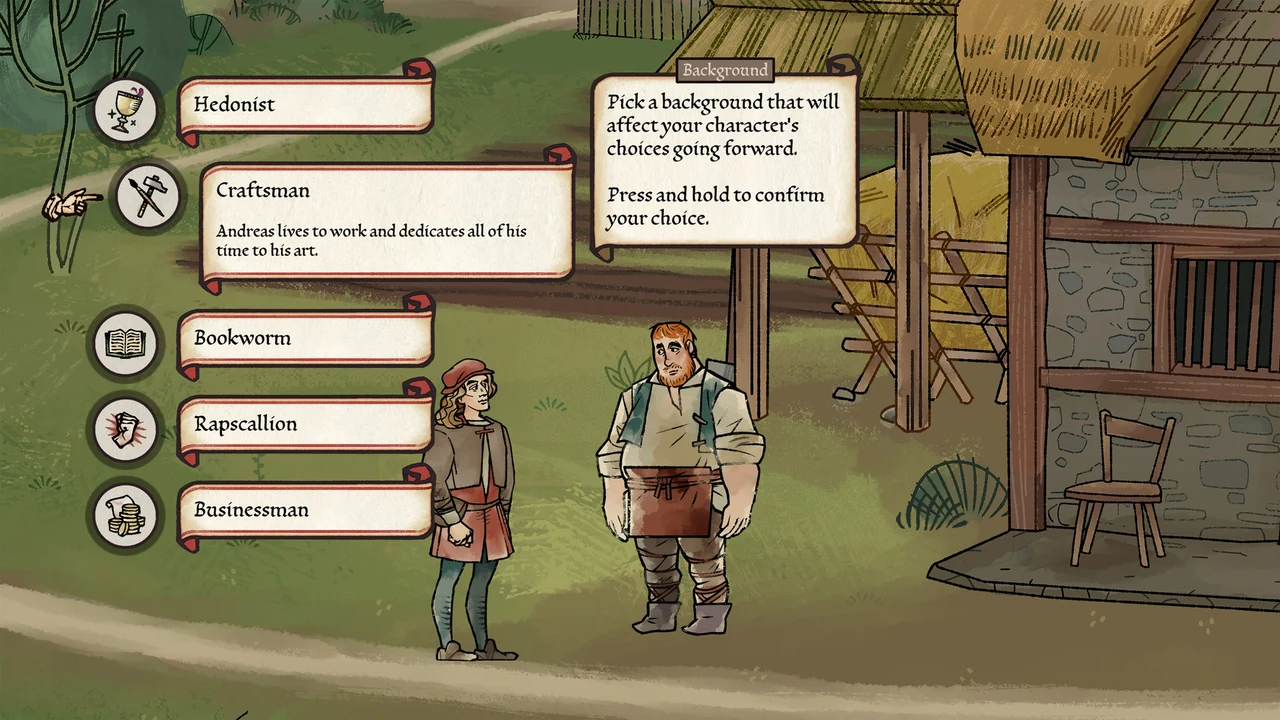
Pentiment places Andreas Maler in a world where work, belief and social position affect how people understand one another. The abbey and town of Tassing are not simply a backdrop for a murder investigation. They are a community with routines and tensions that existed before the crime, and learning those relationships is essential to making sense of what follows. Choosing aspects of Andreas's background gives his conversations a particular shape without turning him into an empty character. He remains an artist with ambitions and obligations, which grounds the player's involvement. For this catalogue, the opening appeal is the opportunity to inhabit a recognisable social role and discover how limited, useful and dangerous that role can become when a community is placed under pressure.
The visual language carries social information
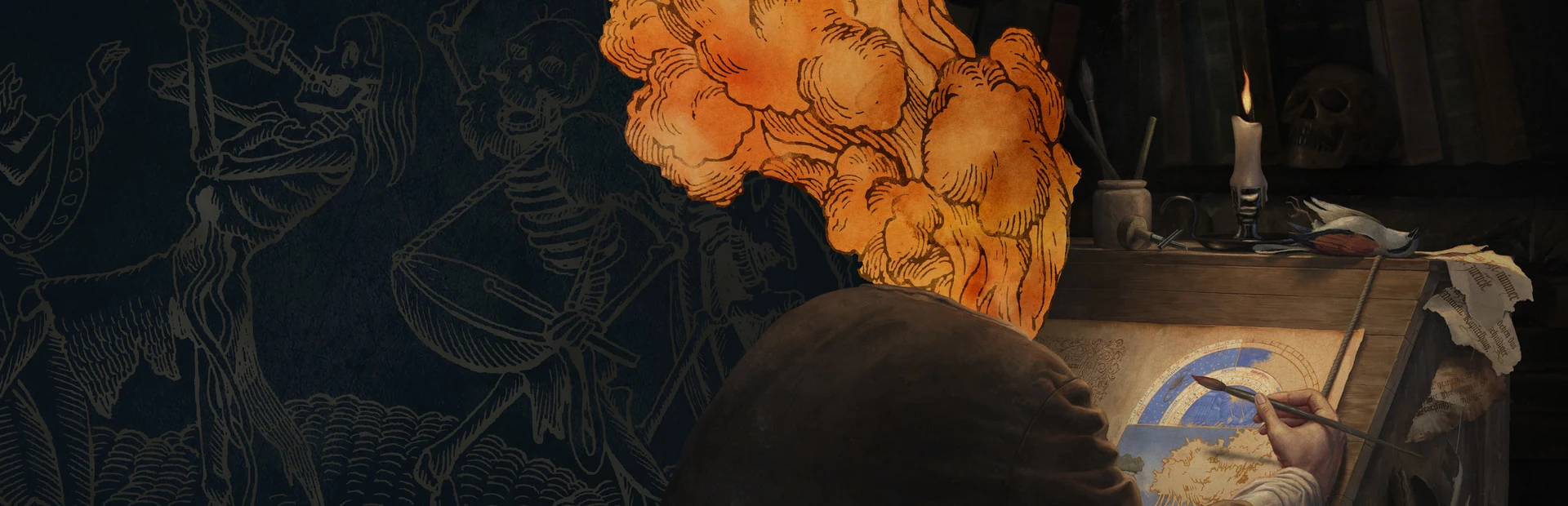
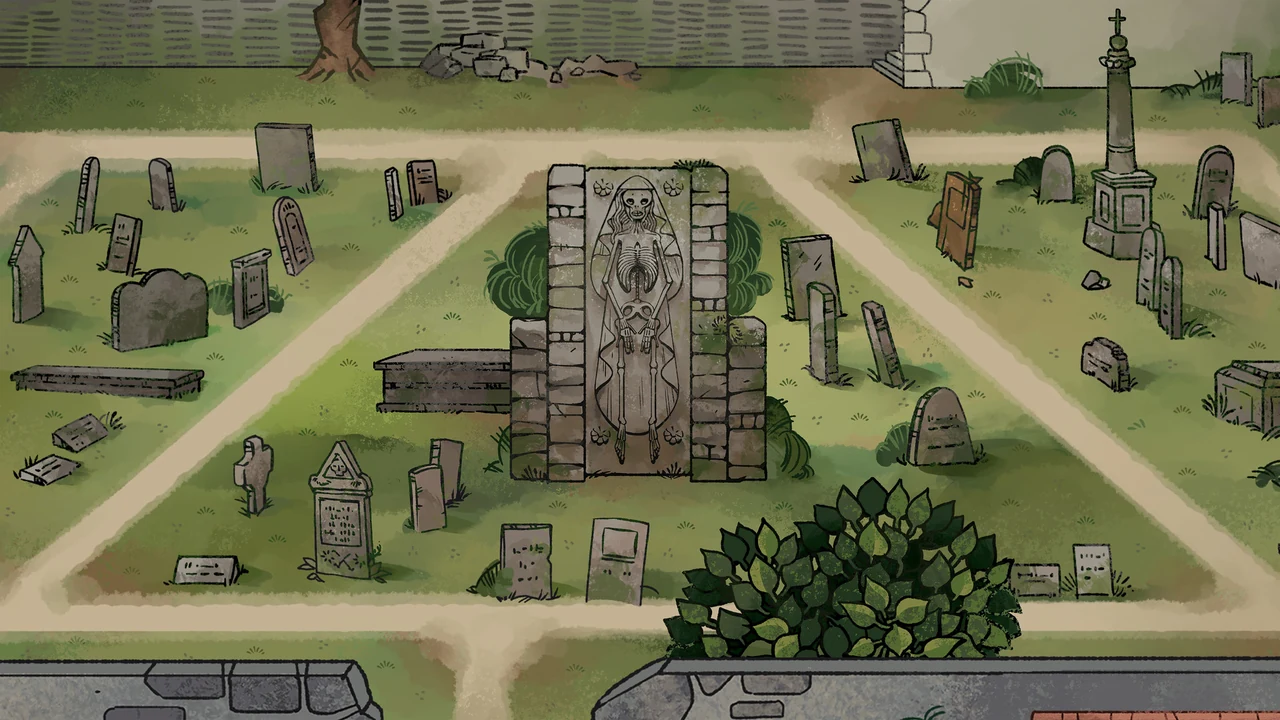
Pentiment's manuscript-inspired presentation is closely connected to its storytelling. Lettering, illustration and the arrangement of scenes help express differences in education, status and perspective. Conversations ask the player to pay attention to how a person speaks as well as to the information supplied. Meals and ordinary visits can be as revealing as an explicitly investigative exchange, because they show how people relate when they are not simply answering a question about the crime. The passage of time gives those observations weight. A decision made during one period can become part of the community's later memory, changing the context in which another event is understood. The story's power comes from treating history as something people inherit and interpret, rather than as a fixed collection of background facts.
Knowledge remains incomplete when action is required
The investigation offers opportunities to gather evidence, but it does not promise unlimited time or perfect certainty. Choosing whom to visit can mean leaving another lead unexplored, and an accusation must be understood within those limits. That structure can be uncomfortable for players who expect a mystery to reward thoroughness with an unquestionably correct solution. The game also relies heavily on reading, with little conventional action to vary the experience. Its historical and religious context asks for attention, although the presentation provides useful support for understanding unfamiliar terms. Pentiment is strongest when uncertainty feels like part of the subject. It is less satisfying if the desired experience is a clean detective exercise in which every clue eventually confirms a single, fully recoverable account.
For a role defined by responsibility
Choose Pentiment when you want an RPG's sense of identity and consequence without a combat system organising the journey. Andreas's background matters, but so does the responsibility of acting with incomplete understanding inside a community that will remember the result. The later development of Tassing gives the story an unusual scale, allowing personal events to become part of a wider history. This is a strong recommendation for patient readers interested in work, faith and the social life of a place. Players seeking fast pacing or extensive mechanical customisation should choose another direction. Its distinctive achievement is making a conversation feel like participation in history: the words are local and immediate, but their meaning can continue changing long after the speaker has left the scene.
The verdict
An absorbing historical role-playing story about responsibility, limited knowledge and the changing memory of a community.
Reasons to play
- Ordinary social encounters carry useful meaning
- Visual lettering supports character and status
- Time gives local decisions a wider reach
Reasons to think twice
- Heavy reading defines the pace
- The investigation resists comfortable certainty
See the game
Assist & accessibility
Explore the available settings and control options on the official game page before choosing your setup.
Parents’ guide
Players: Single-player. No in-game purchase marker in the checked Steam listing. Separate downloadable content may be sold.
Age classification: 16. Bad Language Steam UK listing
A useful starting tip
Choose the lead that best fits your current reasoning instead of assuming every possible conversation must be exhausted first.
A different direction
Compare this with Chants of Sennaar: A distinctive narrative journey in which understanding a language also changes the way a community can be understood.
Official sources
Reviewed: November 2026
You might also like
 Baldur's Gate 3Read review →
 Clair Obscur: Expedition 33Read review →
 HadesRead review →