THE FINAL WORD / EDITORIAL REVIEW
Chants of Sennaar
A distinctive narrative journey in which understanding a language also changes the way a community can be understood.
Game facts
- Developer
- Rundisc
- Publisher
- Focus Entertainment
- Released
- 5 September 2023
- Platforms
- Windows (Steam edition)
- Model
- Paid game
- PEGI
- 7 — Nintendo Switch download edition edition; not a separate PC classification
- Players
- Single-player
- Length
- Short
- Difficulty
- 3 / 5 · Moderate
- Steam Deck
- Verified
PEGI source ↗ · Steam Deck status source ↗
Edition: Base game
The score, explained
The interest and responsiveness of the core decisions and actions.
How progression, exploration and goals fit together.
The coherence of the visual, musical and narrative presentation.
How clearly the game explains its rules and offers useful ways to engage.
The depth of optional goals, alternative approaches and reasons to return.
Language makes the tower unfamiliar
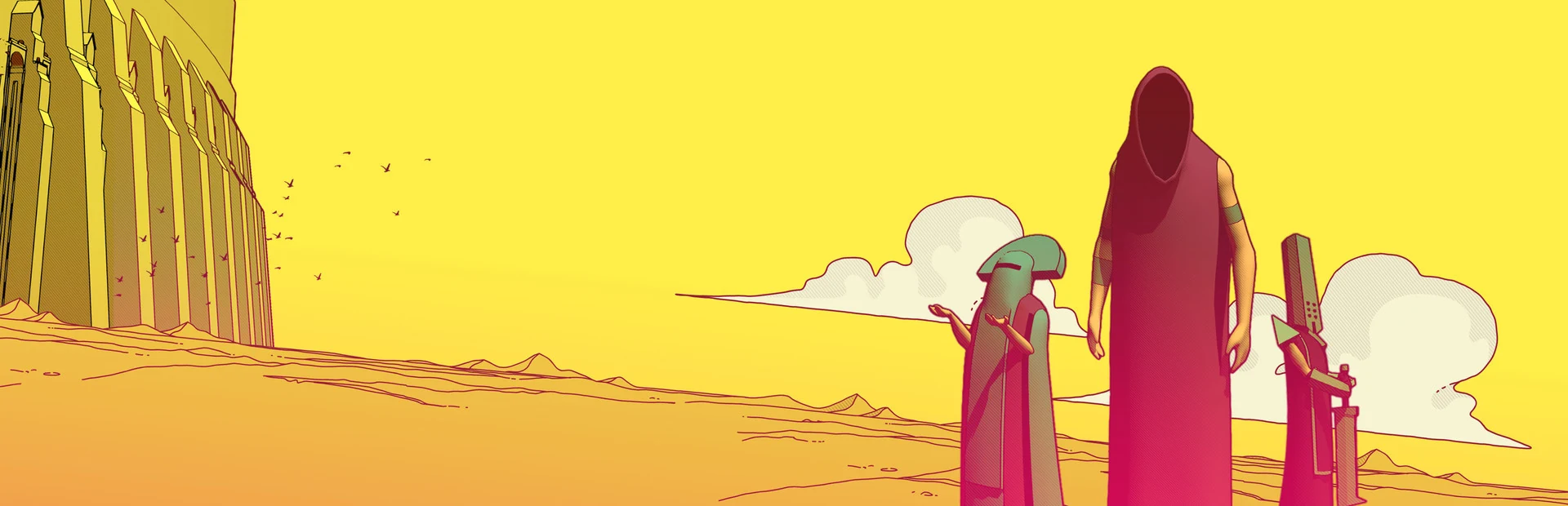
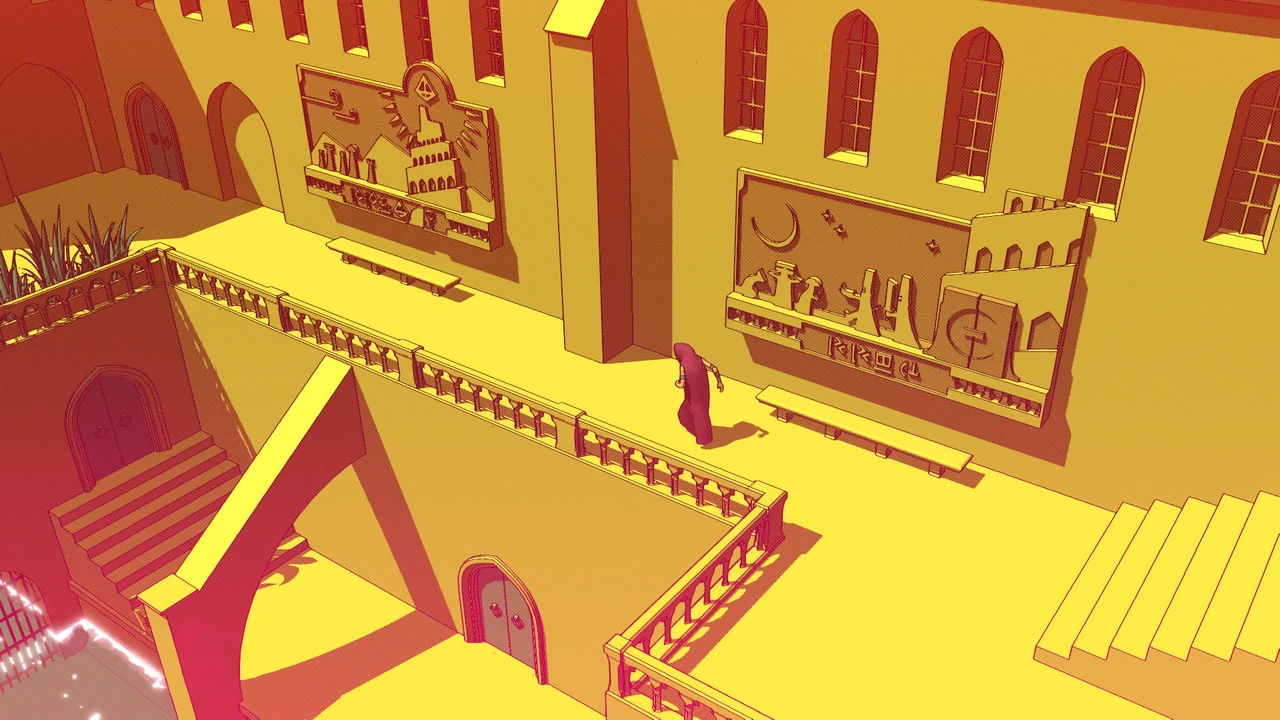
Chants of Sennaar places the player among people whose writing cannot initially be understood. The tower's communities communicate through symbols, gestures and routines, so learning begins with observation rather than a conventional explanation of the setting. A sign near an object, a repeated action or a conversation in a particular place can suggest what a glyph means. The notebook gives those guesses a practical form, allowing understanding to develop gradually. For a story-focused catalogue, this is a distinctive opening because confusion is not merely an obstacle before the narrative starts. It is the condition through which the world is encountered. The player learns about a community by working out what its people are trying to say and why certain words matter to their daily lives.
Understanding changes the meaning of a place
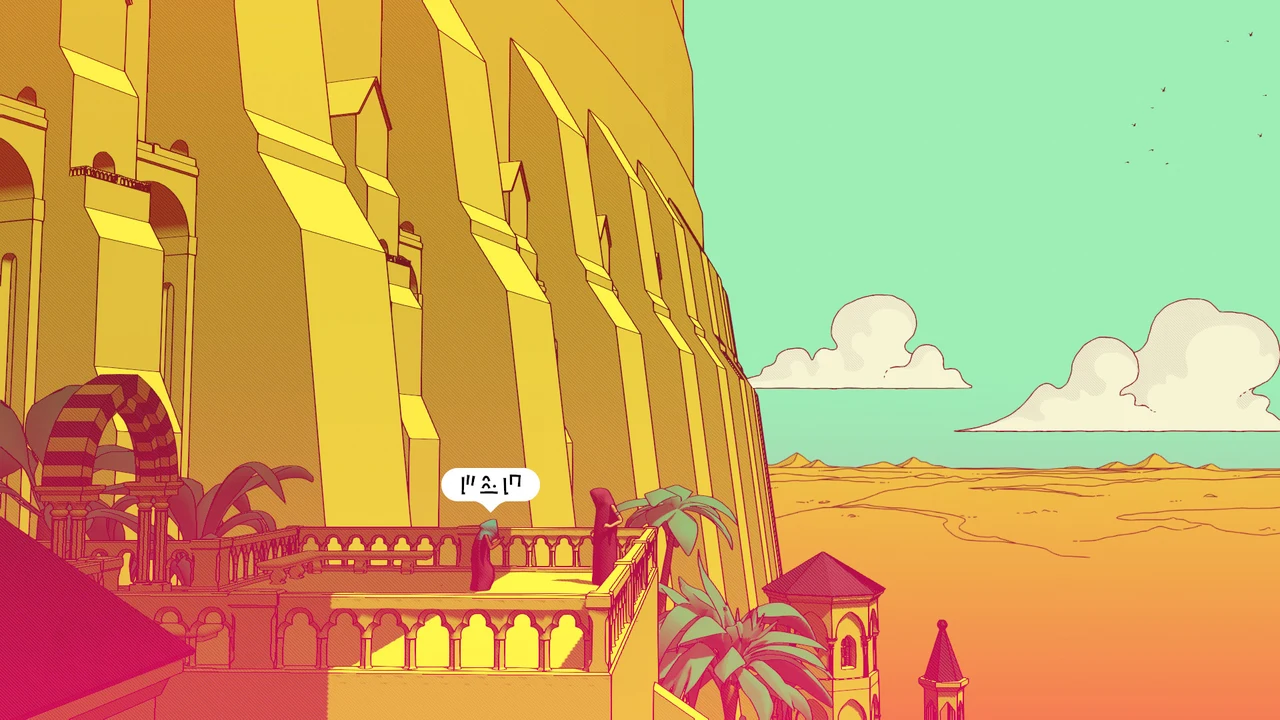
As a language becomes clearer, familiar spaces can reveal intentions that were previously hidden. A command, a ritual or a practical instruction becomes legible, and the community's behaviour begins to form a more coherent account. Moving between groups then introduces another layer: the tower's divisions are not just geographical, but communicative. The game connects puzzle solving to the possibility of understanding people who interpret the world differently. Its visual design supports that work through distinctive architecture, colour and social arrangements. The narrative is strongest when a solved word does more than unlock a door. It changes how an earlier encounter is understood, making the player reconsider a gesture or assumption that seemed obvious when the language was still unfamiliar.
Some interruptions are less persuasive than the language
The central act of interpreting glyphs is stronger than the occasional sequences that ask the player to avoid detection or navigate a more constrained obstacle. Those sections can interrupt the pleasure of studying a community at your own pace. Progress also depends on noticing contextual details, so a missed interaction may leave a word uncertain longer than expected. The notebook's confirmations provide useful feedback, but they can shift attention towards completing a set of entries rather than following the meaning of a scene. These are manageable trade-offs for someone who enjoys patient observation. The game is a weaker fit if you want extensive dialogue choices or character relationships expressed through long conversations. Its story is carried through the work of interpretation itself.
A narrative about the possibility of comprehension
Choose Chants of Sennaar if discovering how people communicate sounds like a worthwhile story activity in its own right. It offers relatively little conventional exposition, yet its communities become recognisable through the patterns of their lives and the words needed to understand them. The tower gives that learning a clear journey, while the different languages prevent familiarity from settling into a single repeated exercise. This makes it a strong recommendation for players who enjoy mysteries, visual reasoning and stories that emerge through action rather than narration. Readers seeking combat or a deeply customised protagonist should look elsewhere. The lasting pleasure is the change from seeing an opaque symbol to understanding a meaningful statement, and recognising that the change has also altered your relationship to the people using it.
The verdict
A distinctive narrative journey in which understanding a language also changes the way a community can be understood.
Reasons to play
- Observation replaces conventional exposition
- New words reinterpret familiar scenes
- Communities have clear visual identities
Reasons to think twice
- Missed clues can stall interpretation
- Stealth interrupts the strongest puzzle rhythm
See the game
Assist & accessibility
Parents’ guide
Players: Single-player. No in-game purchase marker in the checked Steam listing. Separate downloadable content may be sold.
Age classification: 7. Nintendo Switch download edition edition; not a separate PC classification
A useful starting tip
Keep a word meaning provisional until it explains more than one context; a plausible first guess can make later scenes misleading.
A different direction
Compare this with DREDGE: A persuasive maritime mystery that lets work, isolation and the temptation to stay out longer generate its unease.
Official sources
Reviewed: November 2026
You might also like
 Baldur's Gate 3Read review →
 Clair Obscur: Expedition 33Read review →
 HadesRead review →