THE FINAL WORD / EDITORIAL REVIEW
DREDGE
A persuasive maritime mystery that lets work, isolation and the temptation to stay out longer generate its unease.
Game facts
- Developer
- Black Salt Games
- Publisher
- Team17
- Released
- 30 March 2023
- Platforms
- Windows · macOS (Steam edition)
- Model
- Paid game
- PEGI
- 12 — Nintendo Switch download edition edition; not a separate PC classification
- Players
- Single-player
- Length
- Short
- Difficulty
- 2 / 5 · Moderate
- Steam Deck
- Verified
PEGI source ↗ · Steam Deck status source ↗
Edition: Base game
The score, explained
The interest and responsiveness of the core decisions and actions.
How progression, exploration and goals fit together.
The coherence of the visual, musical and narrative presentation.
How clearly the game explains its rules and offers useful ways to engage.
The depth of optional goals, alternative approaches and reasons to return.
A working boat enters an uneasy world
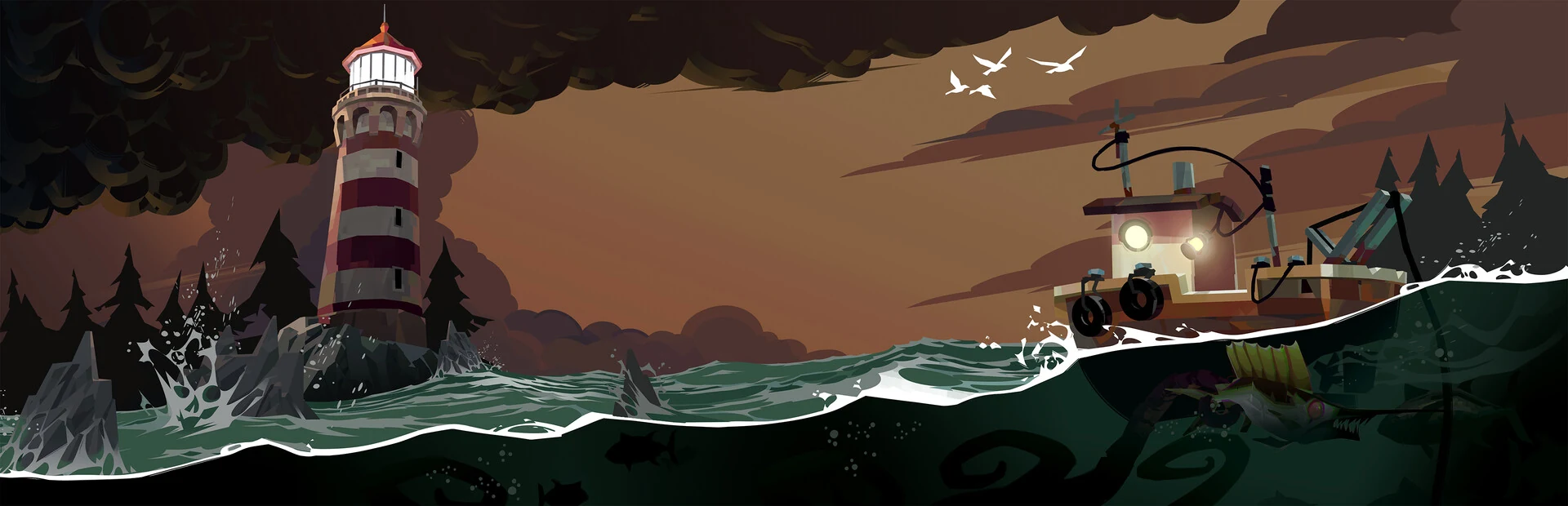
Dredge introduces its mystery through ordinary work. The player arrives with a boat, begins catching fish and takes on the practical tasks needed to keep operating around the islands. That routine gives the strange details a useful contrast. An unusual catch or an unsettling request matters because it interrupts an activity that initially seems understandable. The coastal settlements provide fragments of lives shaped by isolation, trade and things left unsaid. For a narrative reader, the opening works because it does not demand immediate knowledge of the wider horror. It lets the sea become familiar as a workplace first, then gradually makes that familiarity unreliable. The boat is both a means of earning a living and the small, vulnerable space from which the mystery must be approached.
Risk gives the atmosphere a practical consequence
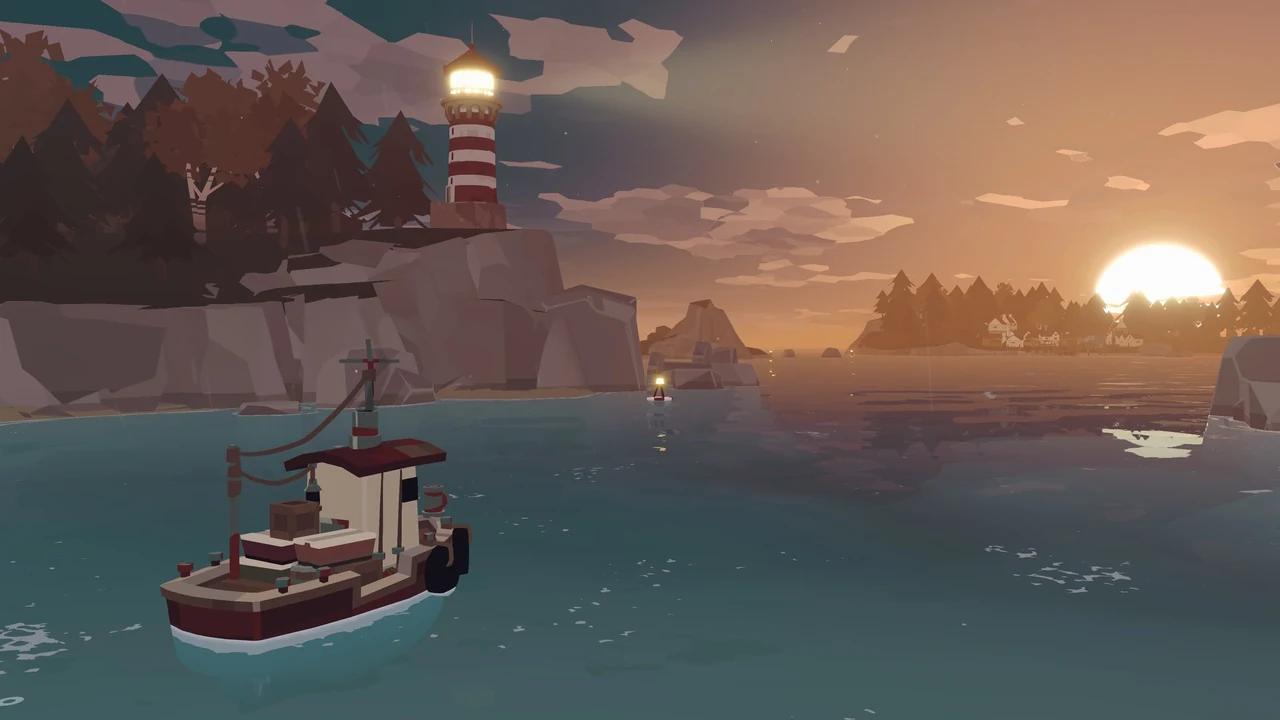
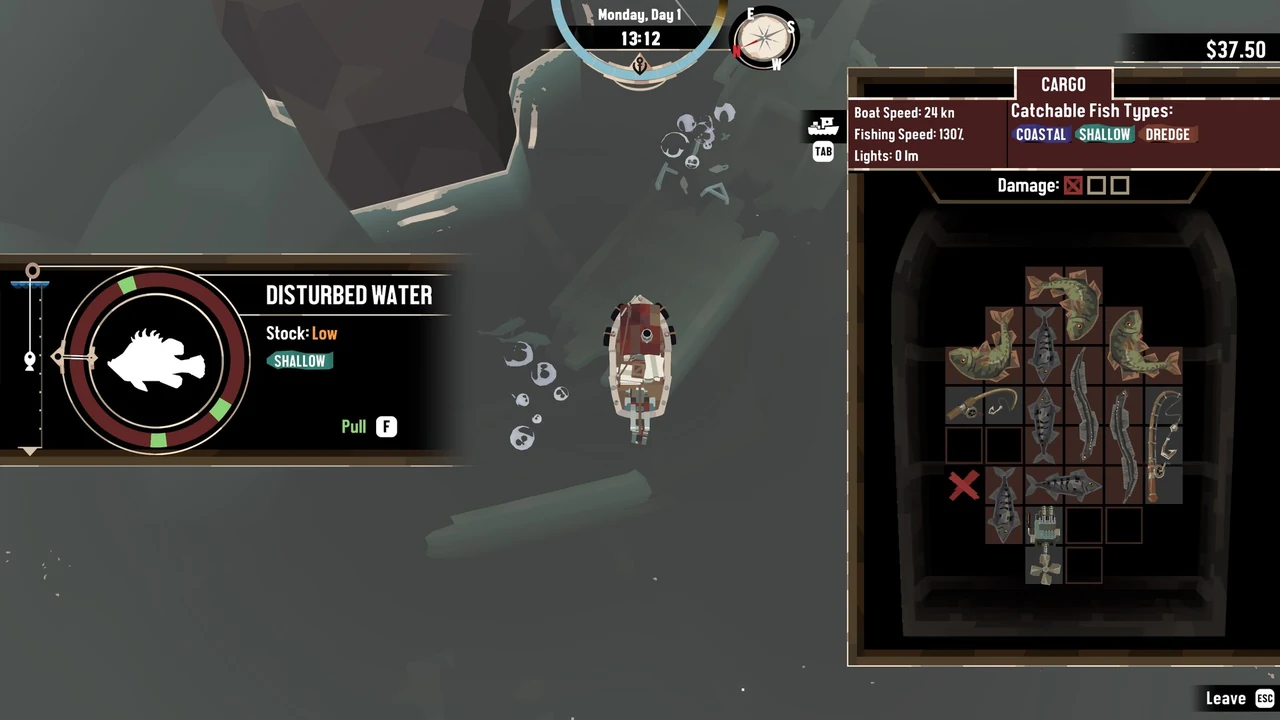
Travelling after dark is not merely a change in colour. Visibility, panic and the possibility of danger affect how confidently the player can navigate, making the choice to stay out longer feel consequential. The inventory's spatial puzzle adds another pressure: a valuable discovery competes for room with fish and equipment, so curiosity has a cost. Upgrades make the boat more capable without removing the uncertainty of the surrounding water. These systems help the story because the player participates in the temptation to keep going. The atmosphere is not only something observed in dialogue or scenery; it is produced by a decision to pursue one more opportunity when returning to a familiar dock would be the more comfortable choice.
The routine can outweigh the mystery for some players
Fishing and returning to port form a repeated cycle, and the narrative depends on that cycle remaining satisfying. A player who wants a new dramatic event on every trip may find the quieter work too prominent. Conversely, someone attracted to a peaceful fishing game should understand that unease and disturbing imagery are central rather than occasional decoration. The story is delivered through fragments and encounters, leaving less room for sustained companion relationships than a party adventure would offer. Progress also requires practical improvements to the boat, which can place resource gathering between moments of discovery. Dredge works best when those activities contribute to the mood. If they feel like separate chores, the distance between its most interesting revelations can become more noticeable than the atmosphere surrounding them.
For a story told through work and temptation
Choose Dredge when you want a compact mystery whose systems help create its emotional effect. The boat's limitations, the changing light and the pressure of limited storage all contribute to the feeling of venturing a little farther than is sensible. Its characters are encountered in brief, suggestive exchanges rather than through an extensive social campaign, which suits the isolated setting. Within this catalogue, it is a strong example of atmosphere and routine carrying narrative together. Players who prefer frequent dialogue choices or a large cast of travelling companions should look elsewhere. The memorable experience is quieter and more solitary: completing a practical job, noticing something that does not fit, and deciding whether the prospect of an answer is worth another journey into unfamiliar water.
The verdict
A persuasive maritime mystery that lets work, isolation and the temptation to stay out longer generate its unease.
Reasons to play
- Fishing gives strange discoveries a contrast
- Night travel turns atmosphere into risk
- Cargo limits make curiosity costly
Reasons to think twice
- Repeated work can outweigh story developments
- Human relationships are brief and fragmentary
See the game
Assist & accessibility
Parents’ guide
Players: Single-player. No in-game purchase marker in the checked Steam listing. Separate downloadable content may be sold.
Age classification: 12. Nintendo Switch download edition edition; not a separate PC classification
A useful starting tip
Decide what the next trip needs to achieve before leaving port, and reconsider that plan as darkness changes the risk.
A different direction
Compare this with Baldur's Gate 3: A vast adventure made personal by companions whose disagreements give the party's journey character and consequence.
Official sources
Reviewed: November 2026
You might also like
 Baldur's Gate 3Read review →
 Clair Obscur: Expedition 33Read review →
 HadesRead review →